The Mainer who fixed a do-nothing Congress
Thomas Brackett Reed was a powerful Speaker who changed the rules and forced the House to act.

It might be hard to imagine, but in the late 19th century, Congress did even less than our current, nearly prostrate, version does now. Gridlock was pervasive, even in the House, where minority party members played games with quorum rules and employed crude, delaying tactics akin to the Senate’s filibuster.
That all changed, however, near the turn of the 20th century when Republican U.S. Rep. Thomas Brackett Reed of Portland, then Speaker of the House, changed the rules of the game.
Powerful, progressive and ruthless, Reed’s regulations gutted the minority party’s power in the House of Representatives to gum up the works — and those rules are largely still in effect today. An acerbic wit standing well over six feet tall, weighing north of 300 pounds, Reed’s political opponents called him “Czar Reed.” They meant it as an insult, but Reed liked the nickname just fine.
Reed was born in Portland on October. 18, 1839, in a house on Portland’s Hancock Street. His family was not wealthy. Reed’s father supported them first as a fishing boat captain and then as a night watchman at a sugar refinery.
Young Thomas Reed loved books and public life from the start, even attending Mayor Neal Dow’s trial over the Rum Riot affair as a teenager in 1855. With thoughts of possibly becoming a minister, Reed attended Bowdoin College, then served as paymaster aboard a U.S. Navy ship on the Mississippi River during Civil War.
Eventually, reed became an attorney and was elected to Maine’s House of Representatives in 1868. He served one term in Maine’s Senate in 1870 and then served as the state Attorney General the same year.
After a few year’s in private practice, mostly defending petty criminals and civil litigants, Reed was elected to the Maine’s U.S. House of Representative’s 1st District seat in 1877. At that time, the state boasted five congressional districts. Reed went on to win re-election 11 more times.
Reed quickly made a name for himself in the national Republican party, back when it was progressive. He favored women’s suffrage and opposed the death penalty. Reed also helped pass a significant Black voting rights bill meant to curb Jim Crow laws in the south. However, the legislation later died in the Senate.
Reed’s personal friends included author and wit Mark Twain, Theadore Roosevelt and influential politician Henry Cabot Lodge. Reed was elected speaker of the house in 1889, serving in the post until 1891. Reed regained the position in 1895 and stayed there until the end of 1899.
Reed is best remembered for his forceful parliamentary rule changes. At the time, congressmen only contributed to an official quorum, needed to do business, if they voted. Minority party members could block legislation by simply not responding when called upon to vote.
Reed changed that in 1890, ordering the clerk to count heads instead of votes. Some startled Democrats hid under their desks where the clerk could not see them. When others tried to flee the room, Reed ordered the sergeant at arms to lock the doors. One Democrat from Kentucky screamed in protest. Reed replied, “The chair is making a statement of fact that the gentleman from Kentucky is present. Does he deny it?”
Also at the time, minority party representatives could delay crucial votes indefinitely by bringing up new points for debate, then discussing and voting on whether the points should be debated, before the original point could be voted on. Reed streamlined the rules, disallowing pointless points of order while a motion to adjourn was already on the table.
Later, Reed’s new rules were formalized into law by majority votes. They’re still in effect today.
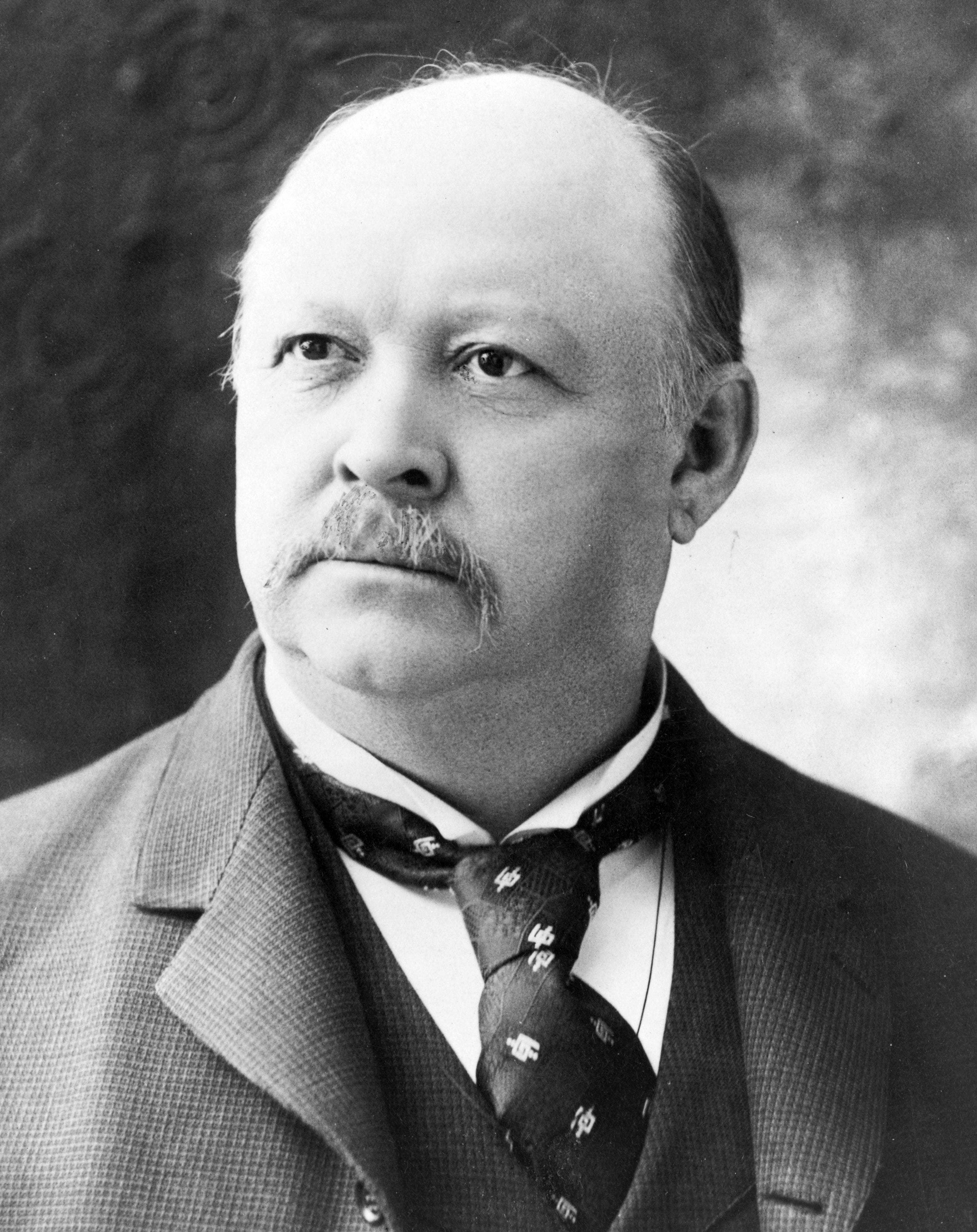

Reed was also a man known for his acerbic wit. When one House member said he’d rather be right than president, Reed told him not to worry because he’d never be either. When Reed’s party was thinking of nominating him for president Reed said, “They could do worse and probably will.” They did, nominating William McKinley instead.
Other gems that sprang from Reed’s mouth include:
“One of the greatest delusions in the world is the hope that the evils in this world are to be cured by legislation.”
“A statesman is a successful politician who is dead.”
“The best system is to have one party govern and the other party watch.”
“The reason why the race of man moves slowly is because it must move all together.”
“Politics is mostly pill-taking.”
“They never open their mouths without subtracting from the sum of human knowledge.”
“One, with God, is always a majority, but many a martyr has been burned at the stake while the votes were being counted.”
“It is a very lonely life that a man leads, who becomes aware of truths before their times.”
“Your friends sometimes go to sleep; your enemies never do.”
Reed eventually resigned his speakership and left the House over the Spanish-American War. Unlike the rest of his party, he didn’t believe in the creation of an “American Empire,” opposing the annexation of foreign territories including Hawaii, Puerto Rico, Cuba and the Philippines.
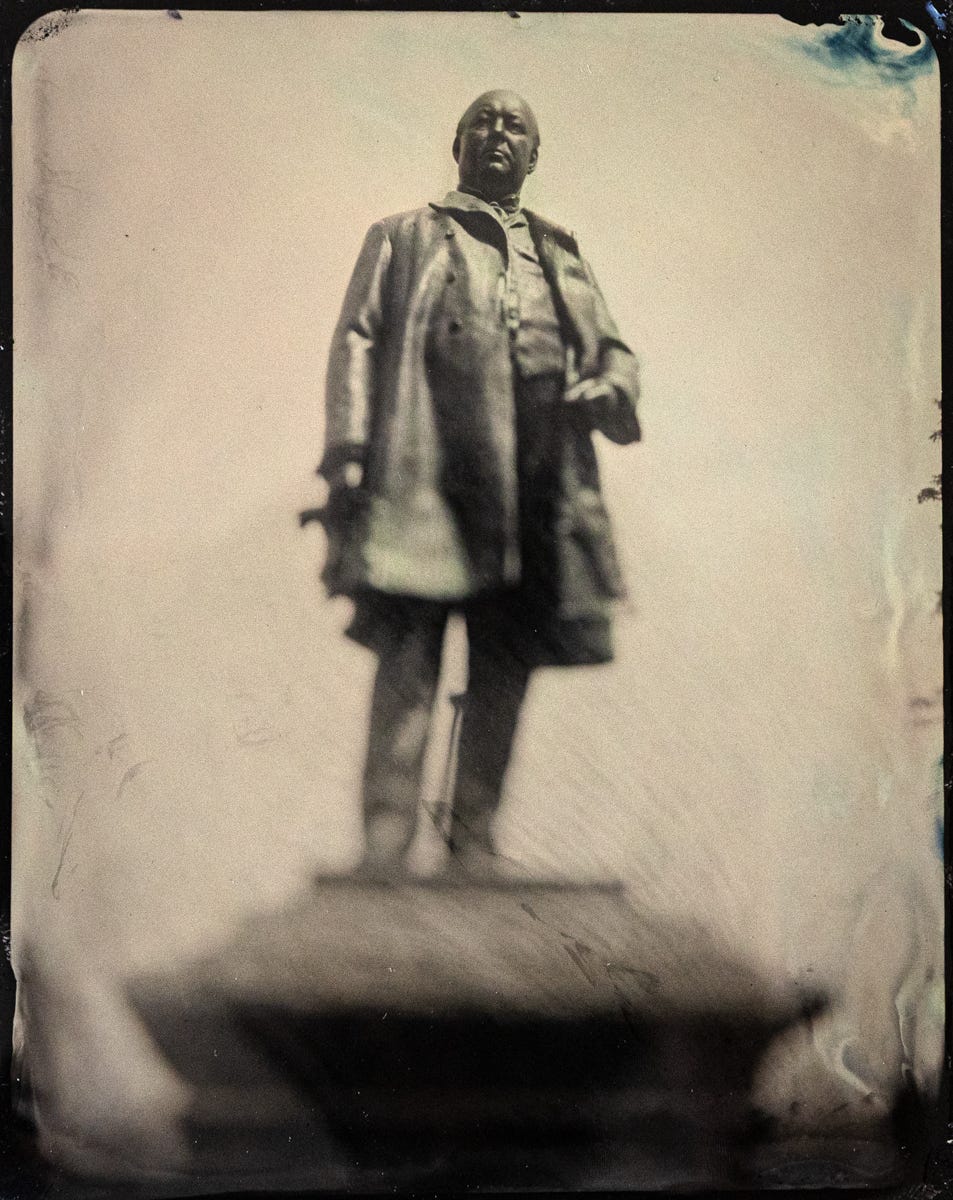
Reed died December 7, 1902, two years after leaving office, at the age of 63. He’s buried in Portland’s Evergreen Cemetery. In 1910, supporters commissioned and dedicated an eight-foot, bronze statue of Reed on Portland’s Western Prom. It’s still there.

In other news…
I’ve got tintype portrait pop-up events coming at Salvage Modern, near the Button Factory, in Portsmouth, New Hampshire on Dec. 5 & 6. Then, I’m in Amesbury, Massachusetts on Dec. 7, at Caravan Boutique. A week later, I’ll be wrangling photons and silver at the Ghost Ship Market in Salem, Massachusetts on Dec. 13 & 14.
The Half Moon Jug Band’s Christmas show is Dec. 19 at Cadenza, in Freeport, Maine. Come stand under the mistletoe with us! There will be eggnog smooches galore and lots of fun twists on the holiday music you love — or love to hate.
I’m closing out 2025 with Bailey’s Mistake at the Maine Irish Heritage Center in Portland, Maine on New Year’s Eve. Doors open at 5:30 p.m. and the opener, Jim Sharkey, goes on at 6 p.m. Then, Bailey’s Mistake will hit the stage at 7 p.m. — just as they ring in the New Year in Dublin. Guinness will be enjoyed, songs will be sung, bells will be rung and bagpipes shall be squeezed for all the mirth they are worth.
One last thing…
Despite getting the boot from my job at the Bangor Daily News in February, I received two small awards from the Maine Press Association last month. One was a third place for sports profile writing, recognizing a story I wrote for the Harpswell Anchor this spring about New York Yankees legend, and Mainer, Stump Merrill.
The other was a second place award for this scenic photo I made for the BDN last year, of which the judges said, “Such a beautiful moment between two people is captured in this photo. Beautifully framed image helps create a peaceful atmosphere.”